Homemade Daily Face Cream: Simple Moisturization
If your skin needs a daily moisturizer that feels gentle, affordable, and nourishing, you can make one yourself using ingredients you probably already have at home. There’s no need for fancy equipment or expensive products.
Want to skip to the recipes? Click here.
This guide walks you through everything step by step, from choosing the right oils and butters to making two easy recipes, one balm and one cream. You’ll also learn how to customize them for your skin type, how to store them safely, and what to avoid.
Homemade skincare should feel simple, calming, and practical. The best part is that you’re in full control of what goes on your skin.
Why Make Your Own Face Cream
Most store-bought moisturizers promise healthy skin but often contain unnecessary fillers, artificial fragrance, and preservatives that can irritate sensitive skin. When you make your own, you skip the mystery ingredients and create something fresh that’s designed specifically for your needs.
When I first tried making my own face cream, it was because every lotion I bought felt heavy or made my skin greasy halfway through the day. Once I started mixing my own, I realized how different clean, basic ingredients can feel. The texture is softer, and my skin stays comfortable all day.
Making your own moisturizer also helps you:
- Avoid harsh fragrances and dyes
- Save money with small, reusable batches
- Adjust the texture for your skin type and season
- Know exactly what’s touching your skin
If you enjoy natural living, this is one of the easiest ways to reduce chemicals in your daily routine.
Safety First
Before you start, it’s important to keep things clean and simple. Always sanitize your tools with 70% rubbing alcohol and let them air dry completely before use.
Do a quick patch test on your inner forearm before using any new product. Apply a small amount and wait 24 hours. If you see redness or experience itchy skin, skip that recipe or ingredient.
Avoid using essential oils if you’re pregnant, nursing, or making products for children. People with eczema, rosacea, or acne should check with a dermatologist before trying new skincare products.
Homemade face creams don’t include SPF. Always apply a separate sunscreen with SPF 30 or higher in the morning, even if your cream includes natural oils.
Choosing Ingredients and Tools
You don’t need a professional setup or a long list of ingredients. A few clean tools and high-quality basics are all you need to make a beautiful, nourishing face cream or balm right at home.
Base Oils and Butters
These create the moisturizing foundation for your recipe.
- Jojoba oil (1 tablespoon or 13 g): Balances your skin’s natural oils and absorbs quickly without feeling greasy.
- Sweet almond oil (1 tablespoon or 13 g): Softens and comforts normal to dry skin.
- Squalane (1 tablespoon or 13 g): Lightweight and silky. Perfect under makeup.
- Grapeseed or hemp seed oil (1 tablespoon or 13 g): Great choices for oily or acne-prone skin.
- Shea butter (1 tablespoon or 15 g): Rich, soothing, and protective for dry or mature skin.
Optional: Coconut oil (1 tablespoon or 15 g) can work, but it’s heavier and may clog pores for some. Use lightly if you’re acne-prone.
Helpful Add-Ins
A few optional ingredients can make your moisturizer even better.
- Vitamin E oil (½ teaspoon or 2 g): Antioxidant that helps keep oils fresh longer.
- Aloe vera juice or gel (2 teaspoons or 10 g): Soothes and hydrates. Great for sensitive or irritated skin.
- Chamomile or lavender hydrosol (2 teaspoons or 10 g): Calms redness and adds a light, natural scent.
- Colloidal oatmeal (½ teaspoon or 1 g): Comforting for dry or easily irritated skin.
Keep things simple at first. Once you’ve mastered the basics, you can start experimenting with add-ins and new textures.
Emulsifiers and Preservatives
If your recipe contains water, you’ll need an emulsifier to blend the oil and water and a preservative to prevent mold and bacteria.
- Emulsifier: Use Olivem 1000 or Emulsifying Wax NF at about 5–7% of your total recipe (roughly 1 teaspoon or 5 g per 3.4 oz batch).
- Preservative: Add Geogard ECT at 0.8–1% (about ¼ teaspoon or 1 g per 3.4 oz batch).
If your recipe has no water (oil and butter only, known as anhydrous), you don’t need a preservative. Just make sure the mixture stays dry and uncontaminated.
Always use distilled water instead of tap or filtered water, and check that your finished cream has a pH between 4.5 and 5.5. This range matches your skin’s natural acidity.
Basic Tools
- Kitchen scale (accurate to 0.1 g) or standard measuring spoons and cups
- Digital thermometer
- Two heat-safe glass bowls or measuring cups
- A small pot for a double-boiler setup
- Whisk, spatula, or small stick blender
- Clean jars or tins with tight lids
- 70% rubbing alcohol and paper towels for sanitizing
- Disposable gloves
- pH test strips (for water-based creams)
Adjusting for Skin Type and Season
Each skin type benefits from slightly different textures and ingredients.
- Oily or acne-prone skin: Use light oils like grapeseed, hemp seed, or squalane. Avoid heavy butters.
- Dry or mature skin: Add more shea butter or argan oil for extra richness. A few drops of glycerin (about ½ teaspoon or 2 g) in water-based creams boosts hydration.
- Sensitive skin: Keep things fragrance-free. Skip essential oils until you know how your skin reacts.
- Summer: Choose light, quick-absorbing oils that won’t feel heavy.
- Winter: Add richer butters or slightly increase the oil-to-water ratio for a protective feel.
Think of your skincare like your wardrobe. You adjust what you wear based on the weather, and your skin deserves the same seasonal care.
Recipe 1: 3-Ingredient Daily Face Balm
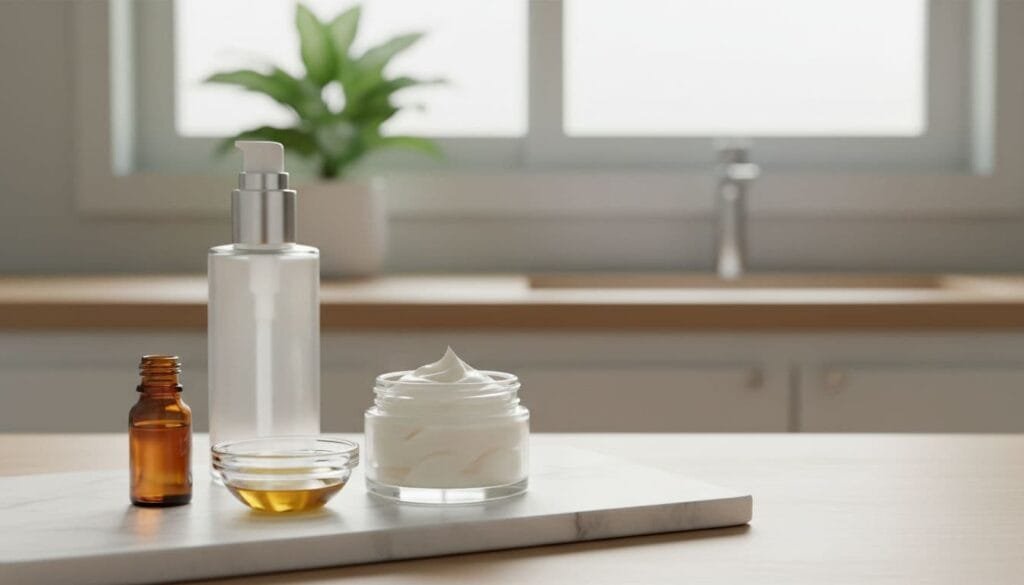
This is a rich, smooth moisturizer that’s perfect for dry or sensitive skin. It contains no water, so it doesn’t need a preservative and can last several months when stored properly.
Makes about 1 ounce (30 g)
Ingredients
- 1 tablespoon shea butter (15 g)
- 1 tablespoon jojoba or sweet almond oil (13 g)
- ½ teaspoon vitamin E oil (2 g)
- Optional: 1–2 drops lavender or chamomile essential oil (skip if your skin is sensitive)
Instructions
- Wipe your tools and jars with rubbing alcohol and let them air dry completely.
- In a heat-safe glass bowl, melt the shea butter over a small pot of simmering water.
- Remove from heat and stir in the jojoba or almond oil.
- Let it cool slightly before adding the vitamin E and optional essential oil.
- Whisk until the mixture looks creamy and smooth.
- Spoon into clean jars, label, and store in a cool, dark place.
Use a pea-sized amount on damp skin. It seals in moisture and leaves a soft, natural glow.
Shelf life: 3–6 months if kept dry and away from sunlight. If the texture turns grainy, gently re-melt it and let it cool in the refrigerator.
Recipe 2: Lightweight Aloe Day Cream
This recipe creates a soft, hydrating cream that absorbs quickly and layers beautifully under sunscreen or makeup. It includes both water and oil, so you’ll need an emulsifier and preservative.
Makes about 3.4 ounces (~100 g)
Water Phase
- 2/3 cup distilled water (67 g)
- 2 teaspoons aloe juice (10 g)
- ½ teaspoon glycerin (2 g)
Oil Phase
- 1 tablespoon jojoba oil (12 g)
- 1 teaspoon shea butter (5 g)
- 1 teaspoon Olivem 1000 or Emulsifying Wax NF (5 g)
Cool-Down Phase
- ⅛ teaspoon vitamin E oil (0.5 g)
- ¼ teaspoon Geogard ECT preservative (1 g)
- Optional: 1–2 drops lavender or chamomile essential oil
Instructions
- Sanitize all tools and containers. Let them dry completely.
- Heat the water phase and oil phase separately to about 160°F (70°C).
- Pour the oil phase into the water phase. Blend for 1–2 minutes using a whisk or short bursts with a stick blender until creamy.
- Allow the mixture to cool to about 104°F (40°C).
- Stir in the vitamin E, preservative, and optional essential oil.
- Check that the pH is between 4.5 and 5.5.
- Pour into clean jars and let it thicken overnight before using.
This lightweight cream sinks in easily, leaves your skin smooth, and feels fresh without shine.
Shelf life: 2–3 months at room temperature if stored in a cool, dry place.
If you want a richer texture, increase the shea butter slightly next time. For a lighter version, swap some of the jojoba oil for squalane or grapeseed oil.
Ready for the Next Step in Toxin-Free Living?
Loved this guide? Get the complete 287+ page system. My Natural Living & Organization Bundle has everything you need to organize your life and live toxin-free.
How to Keep Your Cream Fresh
- Always use clean tools and containers.
- Avoid touching the cream with your fingers. Use a small spatula or spoon.
- Label each jar with the date it was made.
- Keep it away from heat and sunlight.
- Discard if it changes color, smell, or texture.
The balm can last up to six months since it has no water, while the cream is best used within two to three months. Making smaller batches helps keep everything fresh.
Troubleshooting
If your cream separates, it means the emulsifier didn’t fully combine the water and oil. Next time, blend while both are warm and be sure they reach the same temperature before mixing.
If the balm turns grainy, it has cooled too slowly. Re-melt it and place it in the fridge to cool faster.
If your moisturizer feels too heavy, reduce the butter slightly or use a lighter oil. If it feels too light, add a bit more shea butter or try including a richer oil like argan.
These small adjustments can help you fine-tune the texture until it feels perfect for your skin.
Common Questions
Is homemade face cream safe for daily use?
Yes. As long as you use clean tools, safe ingredients, and patch test first. The balm is a great place to start if you’re new to DIY skincare.
Do I need a preservative?
Only for water-based creams. If your product contains water, aloe, or hydrosol, always include a broad-spectrum preservative. Oil-only balms do not need one.
Can I add SPF ingredients?
Yes. However, homemade SPF options aren’t always reliable and can vary. Check out our DIY sunscreen post to learn more about the process, along with a few DIY sunscreen recipes.
Can I add essential oils?
You can, but use very little. I recommend no more than 0.5-1 percent of the total weight, or just a few drops per ounce. Avoid strong oils like citrus, peppermint, or cinnamon, and skip them entirely for children or sensitive skin.
What is the correct pH?
Aim for 4.5 to 5.5. This range matches healthy skin and works with most natural preservatives.
Can I use it around my eyes?
No. The skin around the eyes is thinner and more sensitive. Use this for your face and neck instead.
What if my cream changes color or smell?
That means it’s time to make a fresh batch. Natural ingredients don’t last forever, which is why smaller batches are best.
Bringing It All Together
Making your own face cream isn’t just about saving money. It’s about taking simple, mindful care of your skin. Start with the 3-ingredient balm to get comfortable, then try the aloe cream when you’re ready for something lighter.
Keep your recipes simple and your batches small. Once you see how easy it is to make your own skincare, you’ll wonder why you didn’t start sooner.
Your skin doesn’t need complicated products. It needs gentle, consistent care and a few natural ingredients that truly work. When you create your own face cream, you’re not just moisturizing, you’re choosing calm, intentional living one small habit at a time.