DIY Eucalyptus Multi-Purpose Cleaner: Refreshing Recipe
Tired of cleaners that sting your nose or leave a sticky film on the counter? You’re not alone. This simple homemade eucalyptus-based multi-purpose cleaner cuts grease, freshens the air, and keeps daily messes under control, all without harsh chemicals.
- Why a Eucalyptus-Based Multi-Purpose Cleaner Belongs in Your Home
- What You Need: Simple Ingredients, Safe Tools, and Smart Swaps
- Eucalyptus Multi-Purpose DIY Cleaner Recipes
- Step-by-Step: Make It, Use It, and Get a Fresh, Streak-Free Shine
- Safety, Shelf Life, and Easy Fixes for Common Problems
- Frequently Asked Questions
- Is eucalyptus oil safe to use in household cleaners?
- Can this replace a disinfectant?
- Which eucalyptus oil should I buy?
- Will this damage my countertops?
- How often should I make a fresh batch?
- Can I use this on stainless steel?
- What if I do not like eucalyptus?
- Is it safe around babies and toddlers?
- Can I use this in a mop bucket?
- Wrap-up
Click here to jump to the recipes.
When it comes to all-purpose DIY sprays, this simple option is a go-to for quick wipe-downs and light grease. It smells clean, it’s easy to mix, and as a DIY, it doesn’t cost much at all. You’ll use simple ingredients you likely already have, like water, mild soap, and a few drops of essential oil.
One quick note for clarity. This cleaner helps tackle grime and odors, but it’s not a registered disinfectant. For everyday cleaning, it shines. For disinfecting, use a product approved for that job. Ready to mix a bottle in under 10 minutes and get your kitchen smelling like a eucalyptus grove?
Why a Eucalyptus-Based Multi-Purpose Cleaner Belongs in Your Home
Eucalyptus oil pairs well with soap and water for daily cleaning. It helps with sticky fingerprints, light grease, and stale odors. After a quick wipe, the air feels fresh without that heavy chemical smell.
Compared to store-bought sprays, this homemade version often has fewer irritants, a lower cost per bottle, and less plastic waste. You control the scent, the strength, and the ingredients. Eucalyptus oil is widely used in natural cleaning for its odor-fighting and surface-freshening qualities. Still, do not expect medical-grade disinfecting from a DIY blend.
Use it for regular wipe downs and general upkeep. You will get clean counters and calmer routines, all from a simple bottle you can refill again and again.
Real Benefits for Busy Families: Safer, Cheaper, Greener
- Low-tox ingredients: Water, mild soap, and a touch of essential oil.
- Reusable bottles: Fill once, use for weeks, then refill.
- Savings per ounce: A few pennies per spray when you make it at home.
- Clean scent: Fresh, bright eucalyptus without heavy synthetic fragrance.
- Reduced fragrance exposure: Fewer artificial perfumes floating around.
- A little goes a long way: Essential oils are concentrated, so start small.
Key takeaway: This simple spray helps you clean smarter with fewer harsh ingredients and a lighter hit to the budget.
How eucalyptus helps cut grime and odors
The soap lifts dirt and oils so your cloth can easily wipe them away and do the heavy lifting. Eucalyptus essential oil adds a fresh scent and helps with stale odors, so your space doesn’t just look clean, it smells clean too.
Daily uses:
- Counters and tables after meals
- Sinks and faucets that see constant splashes
- Doorknobs and light switches that get smudgy
- Fridge shelves that need a quick wipe
- Bathroom tiles for a fast refresh
Key takeaway: Soap does the cleaning, eucalyptus supports fresh air and a tidy feel.
Soap-based vs. vinegar-based cleaners: which one should you use?
Both have a place. Here is the simple rule.
- Soap-based: Best for grease and general dirt. Good for most surfaces.
- Vinegar-based: Helpful for glass, mirrors, and hard-water spots.
Do not mix Castile soap and vinegar in the same bottle. They react and weaken each other. Use the soap version for most tasks, and the vinegar version for shiny glass and mirrors.
Key takeaway: Choose soap for everyday messes, vinegar for streak-free shine on glass.
What You Need: Simple Ingredients, Safe Tools, and Smart Swaps
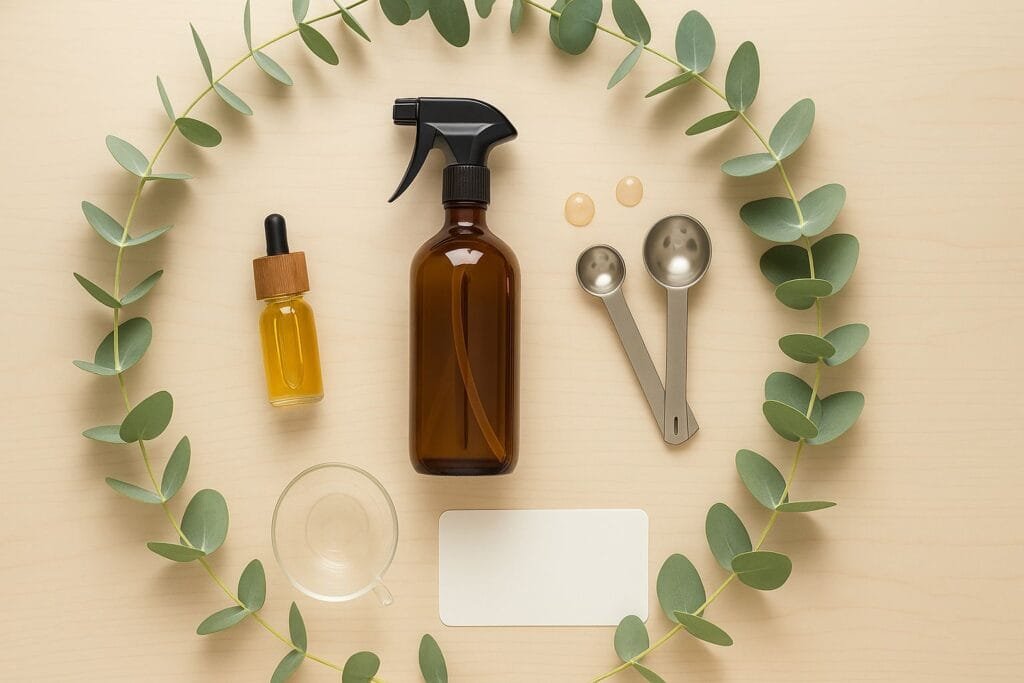
Here is a clear list to get you started with this eucalyptus-based multi-purpose cleaner. Keep it simple and shop your pantry first.
- Distilled or filtered water: Cleaner results and longer shelf life.
- Unscented Castile soap: Mild and effective.
- Eucalyptus essential oil: Eucalyptus radiata has a softer scent.
- Optional oils: Lemon for brightness, lavender for calm, and orange for a sweet-smelling clean scent.
- Amber or cobalt glass bottle: 16 oz (475 ml) spray with a fine-mist sprayer.
- Waterproof label and marker: Add the date and recipe.
Smart swaps:
- If you are out of Castile soap, use a mild, fragrance-free dish soap instead.
- If you prefer a lighter scent, cut the essential oil drops in half.
- Sensitive noses can swap eucalyptus with lavender or orange.
For more support choosing oils and blends for cleaning, see this practical guide: Best essential oils for house cleaning: guide and recipes.
Eucalyptus Multi-Purpose DIY Cleaner Recipes
1.) Core DIY Eucalyptus recipe for a 16-oz spray bottle (soap-based)
- 1 3/4 cups filtered or distilled water (about 414 ml)
- 2 to 4 tbsp unscented Castile soap (30 to 60 ml)
- 15 to 30 drops eucalyptus essential oil (Eucalyptus radiata is a gentler scent)
- Optional: 5 to 10 drops of lemon or lavender for a custom blend
Notes:
- Shake before each use because oil and water separate.
- Use an amber glass bottle to protect the oils from light.
2.) Glass and mirror version without soap (streak-free)
- 1 1/2 cups distilled water (355 ml)
- 1/2 cup white vinegar (120 ml)
- 10 to 20 drops of eucalyptus essential oil
No soap in this version. Do not use vinegar on natural stone like granite, marble, or travertine.
3.) Gentle Stone-Safe Cleaner (Vinegar-Free)
- 2 cups water (473 ml)
- 1 tbsp mild Castile soap (15 ml)
- 10 to 15 drops of eucalyptus oil
This is a gentle, stone-safe mix. No vinegar or acids. For kid-friendly scent swaps, try lavender or sweet orange. Essential oils are concentrated; start with fewer drops and ventilate, especially around kids and pets.
Bottles, labels, and storage that keep it fresh
- Choose amber or cobalt glass to protect oils from light.
- Pick a fine-mist sprayer for even coverage.
- Label with the recipe and date.
- Store in a cool, dark cabinet, out of reach of kids and pets.
- Soap-and-water mixes usually stay fresh for 2 to 4 weeks. The vinegar version can last longer when made with clean tools and distilled water.
Key takeaway: Clean bottles, a clear label, and the right storage keep your spray fresh and reliable.
Step-by-Step: Make It, Use It, and Get a Fresh, Streak-Free Shine

You can mix this in under 10 minutes. Keep it simple with basic ingredients. Remember, this eucalyptus cleaner is for everyday cleaning, not disinfecting.
Mix it right: Easy Steps
- Add water to the bottle first to reduce bubbles.
- Add Castile soap.
- Add eucalyptus oil last.
- Cap and shake gently.
- Label the bottle with the date and recipe.
Note: Shake before each use since separation is normal.
How to clean the kitchen, bath, and floors with less effort
Kitchen:
- Spray and wipe with a damp cloth.
- Rinse food-contact areas like cutting boards and high chair trays.
Bath:
- Spray tiles and sinks.
- Scrub and rinse for a fresh shine.
Floors:
- Add 1 to 2 tbsp of the soap-based mix to a bucket of warm water for light mopping on sealed floors.
- Always test in a small, hidden spot first.
If floors are on your mind, you might like this helpful guide: All-natural floor cleaner recipe with essential oils.
Let it sit: dwell time and when to rinse
On greasy or sticky spots, let the cleaner sit for 1 to 5 minutes before wiping.
Rinse when cleaning cutting boards, high chairs, or toys.
Use a dry microfiber cloth on glass for a streak-free finish.
A simple weekly routine that keeps messes small
- Daily counter wipe after breakfast or dinner
- Quick sink spray each evening
- Midweek bathroom touch-up on faucets and the toilet seat
- Sunday reset with a full wipe down and mop
Refill bottles during your weekly clean so you always have cleaner on hand.
Key takeaway: Small, steady habits cut through clutter and keep your home feeling tidy.
Ready to Simplify Your Whole Routine?
A simple weekly routine is the secret, and having the right plan makes it effortless.
If you’re ready to go beyond this one recipe and organize your entire home, here’s the complete collection to make it happen.

Safety, Shelf Life, and Easy Fixes for Common Problems

Take a calm approach. Keep bottles labeled and out of reach. Use lighter scents if needed. Test on a hidden spot if you are unsure about a surface.
Where not to use it and what not to mix
- Avoid vinegar on natural stone like granite, marble, or travertine.
- Skip unfinished or waxed wood, delicate screens, and unsealed grout.
- Do not mix with bleach or other cleaners.
- Test on a hidden spot first.
Safe use around kids, pets, and sensitive noses
- Keep bottles stored away from little hands.
- Use good airflow while cleaning.
- Start with fewer drops of essential oil for a lighter scent.
- Do not spray near faces, pets, or aquariums.
- Wipe food-contact areas with water after cleaning.
Shelf life, separation, and simple preserving tips
- Soap-and-water mix: 2 to 4 weeks.
- Vinegar version: up to 1 to 3 months if stored well.
- Separation is normal, just shake before use.
- If it smells off or looks cloudy, make a fresh batch.
- Use distilled water, clean bottles, and labels with dates.
Troubleshooting streaks, residue, and strong scent
- Streaks on glass: switch to the vinegar version and use a dry microfiber cloth.
- Soapy residue: reduce soap or rinse with a damp cloth.
- Strong scent: cut essential oil drops by half.
- Grease remains: let the cleaner sit longer, then wipe with a hot, damp cloth.
Key takeaway: Most issues are easy fixes. Adjust soap, scent, or dwell time to get the results you want.
Frequently Asked Questions
Is eucalyptus oil safe to use in household cleaners?
Yes, when diluted and used as directed. Keep cleaners out of reach of children and pets, and do not spray near faces. Always wipe food-contact surfaces with water after cleaning.
Can this replace a disinfectant?
No. This is not a registered disinfectant. It is great for everyday cleaning and odor control. For disinfecting, use an approved product and follow the label.
Which eucalyptus oil should I buy?
Eucalyptus radiata has a gentler scent that many families prefer. Eucalyptus globulus is stronger and more camphorous. Either works when used sparingly.
Will this damage my countertops?
It is safe for most sealed surfaces when used correctly. Avoid vinegar on natural stone. For stone, use the stone-safe soap recipe with no acids and test on a hidden area first.
How often should I make a fresh batch?
Make every 2 to 4 weeks for the soap version, and every 1 to 3 months for the vinegar version. Use distilled water, clean bottles, and labels with dates.
Can I use this on stainless steel?
Yes, the soap-based version works well. Spray onto a cloth, wipe with the grain, then buff dry with a clean microfiber to prevent streaks.
What if I do not like eucalyptus?
Swap the scent. Lavender, lemon, or orange are easy substitutes. Start with 8 to 10 drops, then adjust. Keep pets in mind and ventilate well.
Is it safe around babies and toddlers?
Use fewer essential oil drops, keep the bottle stored away, and rinse high-touch food areas. Always spray onto a cloth, not into the air near little ones.
Can I use this in a mop bucket?
Yes. Add 1 to 2 tbsp of the soap-based mix to a bucket of warm water for light mopping on sealed floors. Wring out your mop well and thoroughly dry the floors afterwards.
Wrap-up
A simple eucalyptus-based multi-purpose cleaner keeps daily messes under control without heavy fumes or a high price tag. You get clean counters, a fresh scent, and a routine that fits real family life.
Pick one version to try today. Start with the soap-based recipe for most tasks, then add the vinegar version for glass and mirrors. Adjust the scent and strength to fit your home.
A tidy home does not need to feel complicated. Mix, label, and spray, then enjoy the peace of mind that comes from a clean space and a simple routine.