Amber Essential Oil Benefits: A Comprehensive Guide
Amber Essential Oil Benefits: A Comprehensive Guide
Amber essential oil may not be as familiar as lavender or eucalyptus, but it’s a wonderful addition to any natural wellness routine. Made from fossilized tree resin, amber has been treasured for centuries for its warm, grounding aroma and gentle therapeutic properties.
- Amber Essential Oil Benefits: A Comprehensive Guide
- Origins of Amber Essential Oil
- Extraction and Composition
- Characteristics of Amber Essential Oil
- Amber Essential Oil and Aromatherapy
- Amber Essential Oil for Skin Care
- Amber Essential Oil Blends
- Safety and Side Effects
- Wrap-up
- Frequently Asked Questions
- Where can I buy amber essential oil?
- What are the benefits of using organic amber essential oil?
- What is the difference between amber essential oil and amber resin?
- What are the differences between amber essential oil and musk essential oil?
- How can amber essential oil be used in perfume making?
- Can amber essential oil be used as a substitute for other essential oils?
- Is amber essential oil beneficial for hair health?
- What other essential oils blend well with amber essential oil?
Today, amber essential oil is used in aromatherapy, skincare, and natural remedies that support both emotional balance and physical comfort. Its soothing scent makes it a favorite for easing tension and promoting relaxation, while its natural anti-inflammatory and analgesic qualities can help calm minor aches and muscle discomfort. Amber also offers light antimicrobial benefits that may support healthy skin and assist the body’s natural healing process.
Key Takeaways
- Amber essential oil comes from fossilized tree resin and has a long history of traditional use for wellness and healing.
- Its anti-inflammatory and analgesic properties make it a helpful natural option for easing minor pain or discomfort.
- Amber essential oil has a calming effect on the mind and body, offering support for stress relief, emotional balance, and overall relaxation.
- Its subtle antimicrobial properties can help protect the skin and encourage gentle, natural healing.
Origins of Amber Essential Oil
Amber essential oil has a rich history that stretches back to ancient cultures. The oil comes from the hardened, fossilized resin of ancient trees. Over thousands of years, this resin transformed into amber, the beautiful golden material many people recognize today.
One of the most well-known sources is Baltic amber, often called the gold of the north. It comes from ancient conifer trees that once grew throughout the Baltic region of Europe. Baltic amber is highly valued for its warm color, natural beauty, and aromatic qualities.
White amber essential oil is another variation. It’s derived from a different type of tree resin and has a lighter color and a gentler aroma compared to traditional amber oil. Both forms are used in natural wellness routines, but each offers its own unique scent and characteristics.
To produce amber essential oil, the resin is typically extracted through steam distillation. This process creates an oil with a warm, woody, slightly sweet aroma that’s loved in aromatherapy and natural perfumery. Thanks to its calming scent and soothing effects, amber essential oil is often used in massage blends and topical applications to help ease tension and support relaxation.
For centuries, its distinctive fragrance and therapeutic qualities have made amber a treasured resource in natural healing traditions.
Extraction and Composition
Amber essential oil is extracted from the fossilized resin of ancient pine trees, which is also known as amber stone. The solid resin is heated and distilled to obtain the essential oil. The composition of amber essential oil varies depending on the raw material used for its extraction.
Amber essential oil contains a combination of organic compounds, including terpenes, sesquiterpenes, and alcohols. It also contains succinic acid, which is a natural anti-inflammatory and antioxidant. This acid is responsible for many of the therapeutic benefits of amber essential oil.
The chemical composition of amber essential oil may vary depending on the location and age of the amber stone. However, the oil is generally considered safe for topical and aromatherapy use.
Characteristics of Amber Essential Oil
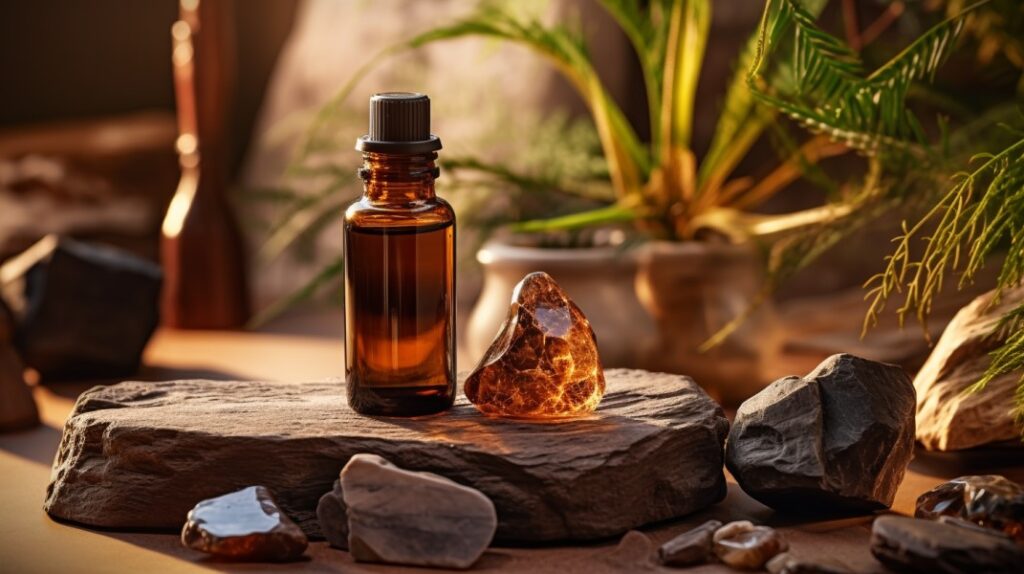
As far as the scent is concerned, it has a woody scent and warm aroma that makes it a favorite among aromatherapy enthusiasts. This oil is typically stored in amber-colored glass bottles to protect it from UV light and maintain its potency, like most essential oils.
When purchasing amber essential oil, it is important to ensure that it is in its pure form and of high quality.
This oil is often used in perfumes, candles, and soaps due to its unique scent and therapeutic properties.
Amber essential oil is known for its calming and grounding effects on the mind and body.
- It is believed to help reduce stress and anxiety, promote relaxation, and improve sleep quality.
- Additionally, this oil is said to have antibacterial and anti-inflammatory properties, making it useful for treating skin conditions like acne and eczema.
Overall, amber essential oil is a versatile and beneficial oil that can be used in a variety of ways. Its unique characteristics and therapeutic properties make it a popular choice among those with an essential oil collection.
Amber Essential Oil and Aromatherapy
Amber essential oil is a popular choice for aromatherapy and is one of many essential oils used for reducing stress and anxiety.
- When inhaled following proper aromatherapy guidelines, the oil stimulates the olfactory system and triggers the release of hormones that promote emotional well-being.
- The limbic system, which is responsible for regulating emotions and memory, is also activated by the scent of amber essential oil.
- This can help to reduce stress and anxiety, promote relaxation, and improve overall mood.
- Amber essential oil is also known for its ability to promote a good night’s sleep. Less stress and more calm equals better sleep, so this essential oil can make it easier to fall asleep and stay asleep throughout the night.
To use amber essential oil for aromatherapy, it can be diffused in a room using an essential oil diffuser or added to a shower. Even better, put a few drops in a warm bath for a relaxing soak. It can also be applied topically when diluted with a carrier oil, such as coconut or jojoba oil.
Amber essential oil is a great choice for those looking to improve their emotional well-being, reduce stress, and promote a good night’s sleep through the use of aromatherapy.
Amber Essential Oil for Skin Care
Amber essential oil is a popular choice for skin care due to a few notable benefits. It has been used for centuries for its anti-inflammatory, antiseptic, and skin-regenerating properties. Below are some of the ways in which amber essential oil can benefit your skin.
Never apply essential oils directly to the skin without a carrier oil. Always perform a patch test.
Skin Inflammation
Amber essential oil has anti-inflammatory properties that can help reduce redness, swelling, and irritation on the skin. It can be used to soothe skin conditions such as eczema, psoriasis, and rosacea. It can also help calm down acne breakouts and prevent future ones from occurring.
Skin Conditions
Amber essential oil is known for its antiseptic properties, which can help prevent infections and promote healing in skin conditions such as cuts, scrapes, and burns. It can also help reduce the appearance of scars and stretch marks.
Skin Regeneration
Amber essential oil is rich in antioxidants, which can help protect the skin from damage caused by free radicals. It can also stimulate collagen production, which can help improve skin elasticity and firmness. This can help reduce the appearance of fine lines and wrinkles.
Skincare
Amber essential oil can be used as a natural moisturizer for the skin. It can help hydrate dry, flaky skin and leave it feeling soft and supple. It can also help balance the skin’s natural oil production, making it a good choice for all skin types.
Stretch Marks
Amber essential oil can help reduce the appearance of stretch marks by promoting skin regeneration and increasing collagen production. It can also help improve skin texture and tone, making stretch marks less noticeable.
Amber essential oil is a versatile and effective ingredient for skin care. It can help soothe inflammation, promote skin health, hydrate the skin, and reduce the appearance of stretch marks.
Amber Essential Oil Blends
Amber essential oil blends well with many carrier oils, including jojoba oil, castor oil, and sunflower oil. When combined with these carrier oils, amber oil can enhance its therapeutic benefits and create a unique aroma.
- One popular amber oil blend is with jojoba oil as a carrier oil. Jojoba oil is an excellent carrier oil that is easily absorbed by the skin, making it an ideal choice for massage oils and aromatherapy blends.
- Another popular amber oil blend is with sandalwood oil. Sandalwood oil has a warm, woody aroma that blends well with the sweet, musky scent of amber oil.
- The above two essential oils can help to promote a sense of calm and relaxation, reduce inflammation, and improve skin health. Mix them with your favorite carrier oil, and you’ve got a great massage oil.
- Sunflower oil is another carrier oil that can be used to create an amber oil blend. Sunflower oil is rich in vitamin E, which helps to nourish and protect the skin. When combined with amber oil, it can help reduce the appearance of fine lines and wrinkles, hydrate the skin, and improve overall skin health.
Whether used for massage, aromatherapy, or skincare, amber oil blends can provide a range of benefits for the mind and body.
Safety and Side Effects
Amber essential oil is generally safe when used properly, but like any essential oil, it should be handled with care. A few precautions can help you avoid irritation or unwanted reactions.
- Pregnant women should avoid using amber essential oil since there isn’t enough research to confirm its safety during pregnancy.
- Some people may experience skin irritation, allergic reactions, or mild respiratory issues when using essential oils, especially if applied undiluted.
- Always perform a patch test before applying amber essential oil to larger areas of skin. If you notice redness, itching, or discomfort, discontinue use right away.
- Keep amber essential oil out of reach of children. Essential oils should never be ingested, and accidental consumption can be dangerous. Seek medical attention immediately if ingestion occurs.
Using amber essential oil responsibly helps you enjoy its benefits while minimizing the risk of side effects.
Wrap-up
Amber essential oil has been valued for centuries for its warm aroma and soothing therapeutic benefits. Whether you’re using it in aromatherapy, skincare, massage blends, or simple natural remedies, it can be a comforting and grounding addition to your essential oil collection.
Just remember to follow proper guidelines, dilute it well when applying it to the skin, and always patch test first. With mindful use, amber essential oil can support relaxation, skin health, and overall well-being.
Frequently Asked Questions
Where can I buy amber essential oil?
You can find amber essential oil online, in many health food stores, and in specialty wellness shops. Choose a reputable brand and look for oils that are pure, high-quality, and free from synthetic fillers.
What are the benefits of using organic amber essential oil?
Organic amber essential oil may support:
- Relaxation and emotional balance
- Reduced stress and tension
- Improved skin comfort and nourishment
- Relief from minor aches or inflammation
Choosing organic helps ensure the oil is free from pesticide residues and synthetic additives.
What is the difference between amber essential oil and amber resin?
Amber essential oil is produced through distillation of fossilized resin, creating a concentrated aromatic oil. Amber resin is the raw, solid form of the resin before distillation. Resin has a milder scent, while the essential oil is stronger and more suitable for aromatherapy and skincare.
What are the differences between amber essential oil and musk essential oil?
Amber essential oil has a warm, sweet, woody aroma. Musk essential oil has a deeper, stronger, more musky scent. Amber is often chosen for its therapeutic benefits, while musk is more commonly used as a fragrance note in perfumes and colognes.
How can amber essential oil be used in perfume making?
Amber essential oil is a popular base note in natural perfumery. You can blend it with floral, citrus, woodsy, or spicy essential oils to create layered, long-lasting fragrances.
Can amber essential oil be used as a substitute for other essential oils?
Amber essential oil has its own unique scent and properties, so it isn’t a direct substitute for other oils. However, it blends easily with many essential oils and can complement or enhance existing aromatherapy or skincare formulas.
Is amber essential oil beneficial for hair health?
Amber essential oil contains succinic acid. Succinic acid is beneficial for promoting hair flexibility and elasticity. It can be added to hair care products or used as a scalp massage oil. Furthermore, when combined with carrier oils like jojoba, it nourishes the scalp, leading to healthier hair.
What other essential oils blend well with amber essential oil?
Amber essential oil blends beautifully with a wide range of scents because of its warm, resinous, slightly sweet aroma. It works especially well as a base note that anchors a blend and adds depth.
Here are some oils that pair nicely with amber:
- Warm and woody oils like cedarwood, sandalwood, and frankincense. These enhance amber’s grounding, comforting qualities and create a richer, more earthy blend.
- Citrus oils such as sweet orange, bergamot, lemon, or mandarin. These add brightness and lift, helping balance the heaviness of amber.
- Floral oils like lavender or geranium if you want to soften the blend or add a gentle sweetness.
- Spicy or resinous oils such as patchouli, myrrh, copaiba, or benzoin for a deeper, more complex fragrance.
Since amber acts as a strong base note, a little goes a long way. Start with small amounts and adjust until the scent feels balanced and pleasant.