
Homemade Mosquito Repellent: Natural DIY Recipes That Work
Summer evenings are meant for slowing down, not swatting at bugs. If you are like me, you want something that keeps mosquitoes away without harsh chemicals or heavy perfumes. A homemade mosquito repellent is one of the simplest ways to make that happen. You get to control the ingredients, enjoy a light natural scent, and keep your family comfortable without spending a fortune.
- Do Natural Homemade Mosquito Repellents Really Work
- How Plant Oils Repel Mosquitoes
- Why Homemade Repellent Fits a Natural Home
- Simple Prevention That Boosts Protection
- Easy Homemade Mosquito Repellent Recipes
- Safety, Dilution, and Family Considerations
- Storage, Clean-Up, and Shelf Life
- Troubleshooting Common Problems
- Can I Use These on My Pets?
- After a Mosquito Bite: Simple Relief Steps
- Bonus Tips for Smarter Natural Living
- Goodbye Mosquitos
Homemade repellents can be made with just a few familiar items, like essential oils, water, and witch hazel. They are easy to refill and safe when used correctly. The biggest benefit is peace of mind. You know exactly what is touching your skin and what is floating through the air around your children.
Natural repellents are not miracle workers, but they are practical. You just have to understand how they work and reapply often. This guide walks you through the science, the recipes, and the safe ways to make your summer nights calm, comfortable, and bite-free.
Do Natural Homemade Mosquito Repellents Really Work
Mosquitoes are drawn to the carbon dioxide we exhale, the warmth of our bodies, and the natural chemicals on our skin. Plant-based oils help by masking those scent cues so we are harder to track.
Essential oils do not kill mosquitoes; they make it more difficult for them to find us. Oils such as lemon eucalyptus, citronella, lavender, rosemary, peppermint, and cedarwood are the most common choices. Lemon eucalyptus and citronella are especially effective, while lavender and rosemary round out the scent so it smells pleasant on skin and clothing.
Since these natural oils evaporate more quickly than synthetic ones, they need to be reapplied every hour or so. That is not a flaw. It simply means you are working with ingredients that the earth created rather than chemicals that linger unnaturally long.
When Homemade Repellents Work Best
- Short outdoor activities like gardening, playtime, or a walk at sunset
- Evenings on the porch or patio
- When you prefer a clean, plant-based scent over a chemical one
- When you want to reduce waste and avoid unnecessary additives
Key takeaway: Natural mosquito repellents make you less noticeable to mosquitoes. They work best for everyday life when reapplied regularly.
How Plant Oils Repel Mosquitoes
Each essential oil contains compounds that affect mosquitoes’ sense of smell. Lemon eucalyptus has citronellal and p-menthane-3,8-diol, two ingredients that naturally discourage bites. Citronella’s bright, citrus scent masks the human scent that mosquitoes follow. Lavender adds a clean floral balance, and rosemary gives a slightly herbal base that helps the aroma last longer.
Using multiple oils together is more effective than relying on one. Some evaporate quickly, creating an instant scent barrier. Others evaporate slowly, giving you a longer layer of protection. Together, they create a pleasant, balanced aroma that feels fresh and still discourages mosquitoes from landing.
Key takeaway: Essential oils confuse mosquitoes by hiding your natural scent. When you combine fast and slow-evaporating oils, you get better and longer-lasting results.
Why Homemade Repellent Fits a Natural Home
Making your own repellent is not only about avoiding harsh chemicals. It is about keeping your home and your habits simple. A few bottles of quality essential oils can serve multiple purposes: natural cleaning, skincare, air freshening, and mosquito control.
You save money, reduce packaging waste, and stay more mindful about what you bring into your home. Store-bought repellents may last longer on paper, but they often rely on synthetic ingredients that are harsh on sensitive skin. With homemade versions, you can adjust scent strength, tailor ingredients to your family’s comfort level, and refill bottles in minutes.
Key takeaway: DIY mosquito repellent aligns perfectly with natural living. It offers transparency, flexibility, and less waste.
Love This Simple, Natural Swap?
This homemade repellent is the perfect way to keep your home simple and low-tox.
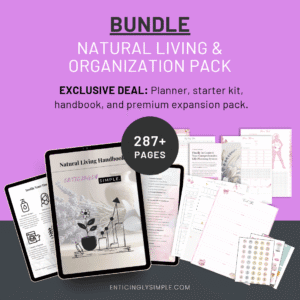
For more easy DIYs, get my Natural Living & Organization Bundle! It includes the Natural Living Handbook (60+ non-toxic DIY recipes) and the Finally in Control Planner to simplify your entire home.
Simple Prevention That Boosts Protection
Repellent is most effective when combined with simple prevention habits. You can cut mosquito presence dramatically with a few easy steps.
- Empty standing water every few days from toys, flower pots, and gutters.
- Keep a fan running on your porch or patio to create a light breeze. Mosquitoes dislike air movement.
- Wear light, loose long sleeves and pants when possible.
- Choose light-colored fabrics that stay cooler.
- Skip heavy perfumes or scented lotions before heading outdoors.
These habits may sound small, but together they make a big difference. Airflow, light fabric, and repellent create a natural shield that is both practical and family-friendly.
Key takeaway: A layered approach offers better protection than repellent alone. Air movement and clothing make any natural blend more effective.
Easy Homemade Mosquito Repellent Recipes
Each recipe below uses simple, recognizable ingredients. Always shake sprays before each use, store them in clean containers, and patch test before applying to your skin. If you have sensitive skin, start with lower oil amounts and adjust as needed.
If you are new to essential oils, this guide explains how to choose quality brands that actually deliver what they claim: Where to Buy High-Quality Essential Oils.
1.) Lemon Eucalyptus and Citronella Body Spray
What you need
- ¼ cup witch hazel
- ¼ cup distilled water
- 15 drops lemon eucalyptus essential oil
- 10 drops citronella
- 5 drops lavender
- 2 teaspoons vegetable glycerin (optional for a softer feel)
- 4 to 8 ounce spray bottle
How to make
- Add witch hazel and essential oils to the bottle.
- Add water and glycerin, then shake well.
How to use
- Spray lightly on arms, legs, and clothing edges. Avoid the face and hands.
- Reapply every hour or when the scent fades.
- Always patch test first on a small area of skin.
Why it works
Lemon eucalyptus and citronella are the core repellents, while lavender helps calm the skin and balance the aroma.
2.) Skin-Soothing Balm Stick for On-The-Go
What you need
- 2 tablespoons jojoba or fractionated coconut oil
- 2 tablespoons shea butter
- 2 tablespoons beeswax or plant wax
- 10 drops lemon eucalyptus
- 6 drops lavender
- 4 drops rosemary
- Twist-up tube or small tin
How to make
- Melt the oil, butter, and wax in a double boiler until smooth.
- Remove from heat and let cool for two to three minutes.
- Stir in the essential oils.
- Pour into the container and let it set fully before use.
How to use
- Apply a thin layer to ankles, wrists, and behind knees.
- Reapply every one to two hours or after swimming.
Why it works
Balms cling longer to skin than sprays, making them great for children or anyone who prefers a quick swipe instead of misting.
3.) Fabric-Only Clothing and Gear Spray
What you need
- ½ cup high-proof vodka or perfumer’s alcohol
- 20 drops lemon eucalyptus
- 10 drops citronella
- 5 drops cedarwood
- 4 to 8 ounce spray bottle
How to make
- Combine alcohol and oils in the bottle and shake well.
How to use
- Lightly mist hats, clothing, and gear while outdoors.
- Allow to dry before wearing.
- Test a small hidden area on fabric first.
Why it helps
Clothing holds scent longer than skin, adding another layer of aroma and extending protection between applications.
4.) Patio Diffuser Blend for Evenings Outside
What you need
- Ultrasonic diffuser
- 6 drops citronella
- 4 drops lemon eucalyptus
- 2 drops lavender
How to use
- Fill the diffuser to the line with water.
- Add oils, set it near where you sit, and enjoy the aroma.
- For extra effect, combine with a small outdoor fan to keep air moving.
Why it helps
Diffusers keep the area smelling fresh and less inviting to mosquitoes while adding a relaxing mood to your space.
Safety, Dilution, and Family Considerations
Essential oils are concentrated, so a little goes a long way. Proper dilution keeps your blends effective and gentle on skin.
Dilution Basics and Patch Testing
- Everyday adult use: 1 to 2 percent essential oils in sprays or balms
- For short outdoor time: up to 3 percent
- For older children: 0.5 to 1 percent
- Always patch test on the inner forearm for 24 hours before wider use
If irritation occurs, wash the area with mild soap and stop using that blend.
Children, Pregnancy, and Sensitive Skin
- Use extra caution with essential oils during pregnancy or on young children.
- Choose milder blends and lower dilutions.
- Balms made with jojoba and shea butter feel soothing and reduce the chance of dryness or irritation.
Pets and Household Safety
- Do not apply essential oils directly to pets.
- Keep diffusers out of enclosed pet areas.
- Provide good airflow and use physical barriers like screens or fans around animal spaces.
Key takeaway: Start with low concentrations, keep the air fresh, and always monitor each family member for any potential skin reactions. For pets, check out this post on DIY flea spray options.
Storage, Clean-Up, and Shelf Life
Homemade blends work best when they are fresh. Natural ingredients slowly break down over time.
Storage
- Keep bottles sealed and stored in a cool, dark place.
- Use amber glass to protect oils from light.
Shelf life
- Sprays last about two to three months.
- Balms last around three to six months.
- Discard blends that change color or smell.
Clean-up
- Wash containers and tools with hot, soapy water and dry them completely before refilling.
- Label each blend with its date and ingredients so you can track freshness.
Key takeaway: Smaller batches stay safer and smell better than large ones stored for months.
Troubleshooting Common Problems
The Scent Fades Too Quickly
Natural oils evaporate faster than synthetics. That is part of their charm. Reapply every hour, layer with a clothing spray, or use a diffuser for added coverage. In balm recipes, a little extra beeswax can help the scent last longer.
The Blend Feels Sticky
You may have used too much glycerin or wax. Reduce these slightly next time for a lighter feel.
The Aroma Is Too Strong
Cut back the number of drops by half or add a little more carrier oil. Scents should be pleasant, not overwhelming.
Key takeaway: Homemade blends are flexible. Adjust your ratios until they fit your family’s comfort level.
Can I Use These on My Pets?
It is best not to. Essential oils can irritate animals, especially cats. Keep blends for human use only. For pets, focus on airflow, screens, and keeping outdoor areas clean.
Key takeaway: Protect pets naturally with air circulation and physical barriers, not oils. Ask your veterinarian before using any essential oils around or on pets.
After a Mosquito Bite: Simple Relief Steps
Even with good prevention, a bite or two might sneak through. Keep it simple when caring for them.
- Apply a cool compress for a few minutes.
- Dab aloe vera gel or an oatmeal paste on the area.
- A drop of very diluted lavender oil may help soothe itching.
- Avoid scratching so the skin can heal quickly.
Key takeaway: Gentle care works best. Cool, calm skin recovers faster than irritated skin.
Bonus Tips for Smarter Natural Living
If you are moving toward a low-tox lifestyle, keep your approach simple. A few high-quality oils can handle most daily needs. The same lavender, lemon eucalyptus, and rosemary that help repel mosquitoes can also be used for homemade cleaners or air fresheners.
Keep your collection small but versatile. Buy oils from trusted sources, store them correctly, and use them consistently rather than chasing dozens of new scents.
Key takeaway: Simplicity keeps your natural home routine affordable, organized, and easy to maintain.
Goodbye Mosquitos
Start with one spray and one balm. Keep dilutions gentle, label everything clearly, and refresh your blends often. A homemade mosquito repellent is an easy way to live more naturally while keeping summer evenings enjoyable.
It does not take complicated ingredients or a long process, just a few minutes of preparation and consistency. Combine your repellent with airflow, loose clothing, and basic home habits to make your outdoor time calm and comfortable.
Natural solutions do not need to be complicated to work. They only need to be consistent. With a few simple recipes and a little planning, you can enjoy fresh summer nights that feel peaceful, safe, and low in stress for everyone at home.